





Huawei’s New Value‑Oriented Sub‑Brand Makes a Long‑Awaited Comeback
After years focusing solely on its premium main‑brand lineup, Huawei is gearing up to launch a brand‑new cost‑effective smartphone sub‑brand, stirring excitement across China’s consumer‑tech community. Reliable industry leaks suggest this upcoming label, tentatively named “HUAWEI Starburst” (Huawei Xingmang), is preparing to release its debut smartphone as early as mid‑to‑late November 2026. This move evokes memories of Honor, Huawei’s former sub‑brand that once dominated China’s online smartphone market before corporate separation.
Back in late 2020, Huawei parted ways with Honor amid global industry headwinds. For years afterward, Huawei released mobile products only under its core Huawei brand, concentrating resources on high‑end flagship devices. Now, with Kirin chip production capacity restored and the HarmonyOS ecosystem greatly expanded, Huawei appears ready to revisit the sub‑brand strategy that fueled its historic market dominance. The “Huawei Xingmang” trademark was first filed in 2023, with a substantial expansion of product categories registered in July 2026, covering smartphones, laptops, wearables, eyewear and semiconductor products.
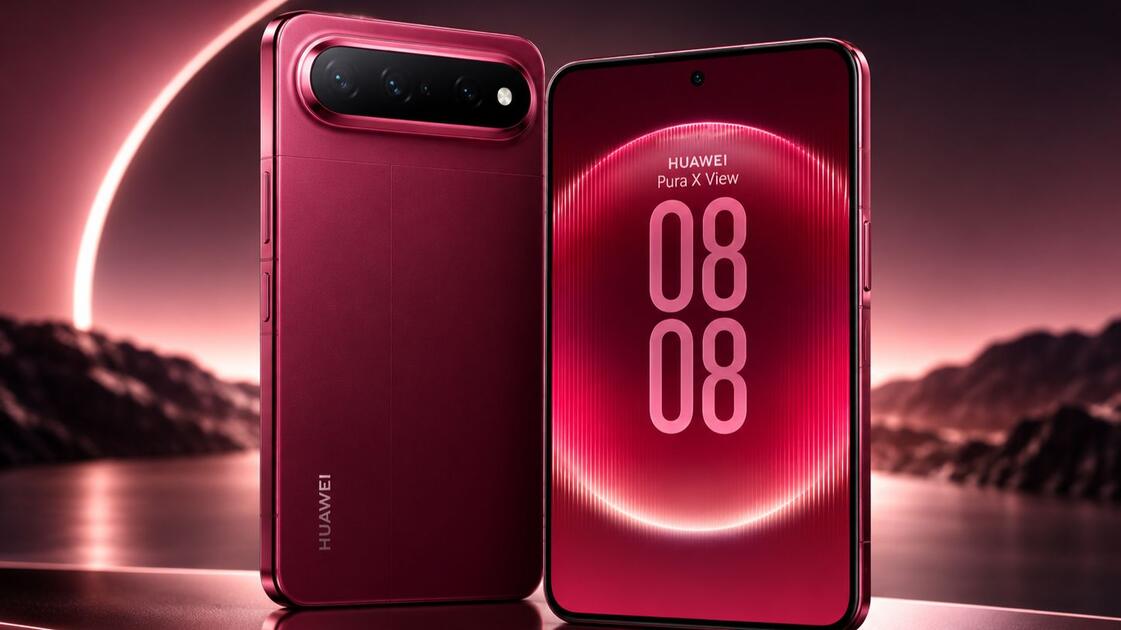
The first Starburst handset, codenamed O1 Pro, adopts the distinctive wide‑aspect “wide straight‑screen” design pioneered by Huawei’s premium Pura X View. This special panel feels like a compact tablet in‑hand and delivers outstanding viewing experiences for streaming short‑form videos, comics and web content. Market performance of the higher‑priced Pura X View helps explain this product decision: launched on September 9, this high‑end wide‑screen flagship had shipped more than 750 000 units by week 43 (October 19‑25), even with an average retail price around 7 000 yuan. Such robust sales proved consumers genuinely crave this unconventional form factor.
According to circulating specifications, Starburst O1 Pro carries a 6.39‑inch display with a rare 16:9.5 aspect ratio and ultra‑narrow 1.05 mm equal‑width bezels, largely matching the screen hardware of the Pura X View flagship. Industry insiders speculate Huawei repurposed this mature display hardware for its new sub‑brand. Under the hood sits a Kirin 9‑series chipset; analysts consider Kirin 9020 the most probable option, balancing performance and cost while avoiding both the older Kirin 9010S and over‑specced Kirin 9030 chips.
To hit competitive pricing, the O1 Pro downgrades camera hardware relative to the Pura X View. It retains a large‑size image sensor and Hongfeng natural‑color lens system but removes the periscope telephoto module entirely. Battery capacity tops 7 000 mAh paired with 100 W wired fast charging, preserving the long‑duration battery life valued by wide‑screen users. Memory and storage configurations are more flexible than the premium counterpart. Buyers can select 12 GB+256 GB, 12 GB+512 GB, 16 GB+512 GB and top‑end 16 GB+1 TB variants. Notably, the Pura X View offers only 12 GB RAM across all models, giving Starburst O1 Pro a tangible advantage for power users who need larger memory capacity.
Industry observers forecast the Starburst O1 Pro may start near 4 000 yuan, with third‑party retailers possibly pushing real‑world selling prices down toward 3 500 yuan after launch. This would bring the desirable wide‑straight‑screen experience to a far broader audience compared with the 5 999‑yuan starting price of Pura X View.
The strategy echoes Huawei‑Honor’s glory days. Launched independently in December 2013, Honor competed aggressively in value‑focused online segments. The Honor 3C went head‑to‑head against competing budget phones, selling 220 000 units within 10 seconds of its first sale event. Within 10 months, Honor’s cumulative sales passed 10 million devices. By 2017, Honor recorded 49.68 million unit sales and 71.6 billion yuan revenue from January through November alone, securing its title as China’s top internet‑oriented phone brand. During its peak phase, Huawei and Honor together captured 41 percent of China’s domestic smartphone market share in Q3 2020, meaning roughly one out of every 2.5 phones sold nationwide belonged to the Huawei ecosystem.
Multiple conditions now support Starburst’s arrival. HarmonyOS software ecosystem has matured substantially, and domestic manufacturing capacity for Kirin‑series chips has scaled up, allowing Huawei to operate separate high‑end and mid‑tier product lines. Most competing Chinese brands will not launch comparable wide‑straight‑screen hardware until 2027. Consequently, Starburst O1 Pro will face very limited direct competition in the short term. The biggest potential bottleneck is manufacturing output; even today, customers ordering the Pura X View often wait weeks for delivery. If Huawei can ramp‑up production sufficiently, this affordable wide‑screen device could generate spectacular sales volumes.
All hardware details above stem from industry leaks, and Huawei has not yet made any official statements about the Starburst sub‑brand or the O1 Pro handset. Consumers must wait for formal launch announcements for definitive specifications and pricing information.